
Changing your dog's food might sound simple at first: buy new food, put it in the bowl, and you're done. In practice, however, many dogs react more sensitively than you might think – especially if not only the brand, but also the ingredients, protein source, fat content or the type of meal (e.g. switching from dry food to fresh food) changes. That is exactly why it is worth taking the time to make the change consciously and step by step. This gives your dog's digestive system time to adapt and minimizes the risk of diarrhea, bloating, or vomiting.
Table of Contents
Why changing your dog's food can be a good idea
There are many reasons why dog owners change their dog's food. Sometimes it is a conscious decision to improve quality or try a different type of food, sometimes it is for health reasons. Many dogs benefit, for example, from having a recipe that better suits their current lifestyle as they get older – perhaps because they are less active, have gained weight, or are going through a sensitive phase.
Also, intolerances or allergies are common triggers. Typical signs can include recurring soft stools, tummy rumbling, bloating, itching, or ear problems. Not every symptom automatically means "allergy", but if you repeatedly observe similar symptoms, a well-planned food change can be a good idea. The needs of puppies or senior dogs also change: puppies need a different nutrient composition than adult dogs, and older dogs often benefit from meals that are easier to digest.
Very important: If your dog has a chronic illness or you are supposed to follow a veterinary diet, the change should always be carried out in consultation with your veterinarian.
The most important principle: change slowly
Your dog's intestines are creatures of habit. They are accustomed to certain ingredients and quantities, and the microorganisms in the intestines need time to adapt to new nutrients. If you change too quickly, your dog's body may not yet be able to process the new composition properly. This often manifests as soft stools or diarrhea, and sometimes also as vomiting or significantly more bloating than usual.
Therefore, as a rule of thumb: the greater the difference between the old and new food, the more important a gradual change is. Switching from one type of dry food to another is often easier than making the jump from dry food to fresh food – but even here, a gradual approach is worth it.

The 7–10-day plan: how to mix old and new food properly
For most dogs, a transition period of seven to ten days has proven successful. During this time, you mix the new food gradually into the previous food so that the body can slowly adapt to the new composition.
For the first two days, start with a small portion – approximately one-quarter new and three-quarters old. If that works well, increase to a half-and-half ratio over the next few days. Then move to three-quarters new and one-quarter old, and only then switch completely to the new food.
If your dog is very sensitive, has already reacted with diarrhea before, or you know that their stomach quickly "turns", you can take more time. Ten to fourteen days is often the more relaxed choice – and ultimately the one that saves you the most stress.

Bello's tip:
To support your dog's gastrointestinal health permanently and in the long term, we recommend the HelloBello Gastrointestinal Drops. These contain probiotics and prebiotics, which promote natural intestinal regulation while also strengthening the immune system
How to tell if your dog is tolerating the change well
During the transition, it is worth taking a closer look than usual. The most important thing is actually the output: stool consistency, frequency, and whether your dog feels comfortable after eating. Slightly softer stools can occur in the first few days, especially if the fiber content or moisture in the food changes. The key is whether this settles again quickly and whether your dog otherwise appears fit.
If you notice that the stool becomes significantly watery, your dog vomits more often, appears very listless, or blood is visible in the stool, you should not increase the new food further, but react immediately. In such cases, it makes sense to take the mixing ratio back one step or initially stay on the current ratio for a few days. And if it does not improve quickly, a check with the veterinarian is the safe option.
What to do if your dog gets diarrhea or bloating?
If your dog reacts with diarrhea during the transition, it does not automatically mean that the new food is "bad" – often it simply went too fast. In many cases, it helps to slow down the pace. In that case, it is better to stay with the ratio that was just working well for two to three days longer before increasing further. Sometimes taking a step back is also useful: If you were at 50/50 and it turns the stomach, go back to 25% new and observe.
It is also important during this phase to "experiment" as little as possible with additional things. Many snacks, chew items, or table scraps can additionally stress the digestion and make it difficult for you to identify the cause. The simpler you keep it, the more clearly you can see whether the transition is working overall.

What if my dog won't eat the new food?
This also happens – and is usually less dramatic than it feels. Some dogs need time to get used to the smell or consistency, especially if you are switching from dry food to fresh meals. Often it helps to warm the food slightly or mix it with some warm water so that the aroma becomes more intense. With fresh food, even gently warming it in a water bath or leaving it for a short while at room temperature (not ice-cold from the refrigerator) can make a difference.
A clear routine is also helpful: put the bowl down, give them 15–20 minutes, then take it away again. This sounds strict, but for many dogs it is a helpful signal and prevents them from "snacking" for hours. If your dog is generally in good spirits and just seems picky, a little patience is usually the best approach.
However, if your dog completely refuses, appears listless at the same time, or you have the impression that they feel nauseous, this should be checked by a veterinarian.
Special considerations for puppies, senior dogs, and sensitive dogs
Puppies often have a more sensitive gastrointestinal tract and react more quickly to changes. In this case, it is almost always worth planning the transition over a slightly longer period, so rather ten to fourteen days. The same applies to dogs that have reacted with diarrhea more often in the past or generally have a sensitive stomach. For these dogs: the calmer the transition, the better.
For senior dogs, in addition to tolerability, the energy and nutrient supply is also crucial. Older dogs do not automatically need less food, but often a different composition that is easier to digest and better suits their metabolism. Here too, a slow transition is the safe way.

An important note on homemade food
Many dog owners want to cook for themselves – out of love and because they like to have control over the ingredients. The only problem is: A nutritionally complete ration is more complex than it seems at first glance. It is not just about “meat and vegetables,” but also about minerals, vitamins, and the right balance of nutrients. If you want to cook for yourself, it is therefore advisable to have a plan created by veterinarians or a qualified nutritionist. This way, you can ensure that your dog is truly optimally nourished in the long term.
If you want to save yourself this effort but still value fresh ingredients, fresh food such as HelloBello can be a practical alternative: Our meals are pre-portioned, gently prepared, and formulated so that your dog gets all the important nutrients – without you having to do any calculations or supplement yourself.
Conclusion: This is the best way to switch your dog's food
Switching food is not a sprint, but rather a short, well-planned walk. If you switch gradually, increase the mixing ratio step by step, and keep a closer eye on your dog during this time, the transition will go completely smoothly in most cases. And even if you occasionally experience soft stools or bloating, you can often bring things back to normal simply by adjusting the pace.
Ready to give your dog a healthier and longer life?
Order gluten-free dog food now and 30 % save!
Order now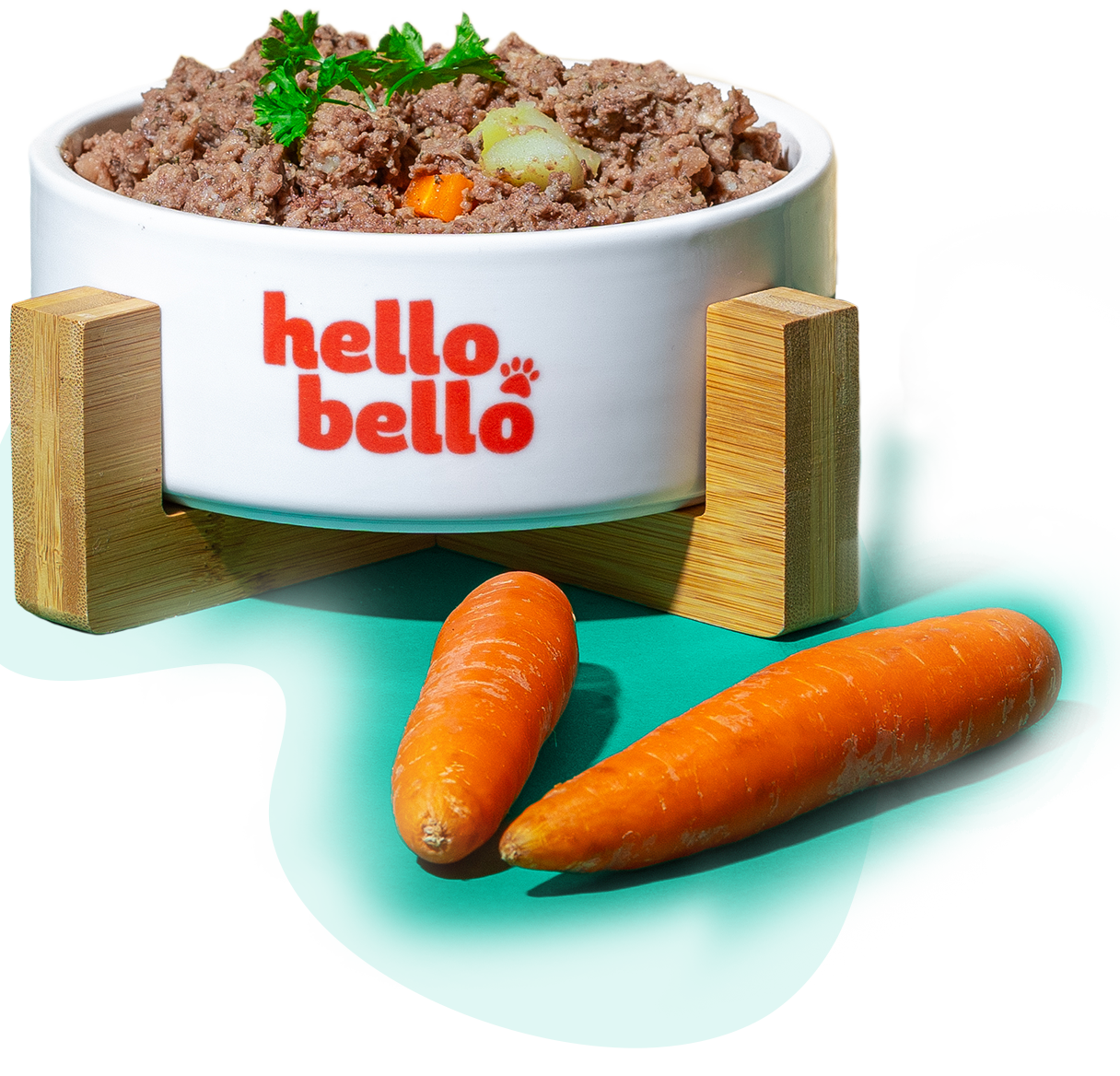


Ähnliche Artikel


