
Many dog owners swear that pork is taboo – but why? What is behind this widely held rule, and what risks are actually associated with pork? In this blog post, we clarify the most important questions and show how pork can be safely integrated into your dog's diet.

Is pork even safe for dogs?
The question of whether pork is safe for dogs depends on several factors. Basically: Yes, pork is safe for dogs, as long as it is prepared correctly. The most important criterion is the preparation: pork should always be thoroughly cooked to eliminate harmful bacteria such as Salmonella, which can pose a risk, especially with raw meat.
Another crucial criterion is the meat quality. The meat should come from a trusted source and contain no additives or harmful substances. Combined with a balanced diet and taking into account your dog's individual needs, pork can be a valuable source of nutrition.
However, there are some precautions you should take to avoid potential health risks. For example, pork bones must be avoided at all costs, as they can easily splinter when chewed and cause serious injuries to the mouth or digestive tract.
Are all parts of the pig safe for dogs?
Not all parts of the pig are suitable for dogs. Lean pork, such as pork fillet or pork cutlet without bones, can be safely fed, as long as it is prepared correctly.
However, fatty meat should be avoided, as it can lead to stomach problems. Pork bones are also dangerous and should never be fed, as they can splinter and cause serious injuries.
If you want to offer your dog pork as a treat, make sure to feed it lean, cooked meat without bones in small portions to avoid digestive problems.
How should pork be prepared for dogs?
It is recommended to always cook pork thoroughly to minimize the risk of Salmonella or other harmful bacteria. Raw or insufficiently cooked pork can cause diseases such as salmonellosis, which are dangerous not only for your dog but also for the people in the household.
Cooking the meat ensures that harmful bacteria are killed, the meat becomes easier to digest, and the nutrients can be better absorbed.
Avoid preparing pork with spices or marinades, as these can be problematic for dogs. Fatty preparations such as roasts should also be avoided.

How much pork can a dog eat?
The amount of pork you can give your dog depends on various factors, such as size, activity level, and the dog's individual needs. Smaller dogs generally need less meat than larger dogs, while very active dogs need a slightly larger portion.
It is important to dose the meat portions carefully, as excessive consumption of fatty pork can lead to digestive problems and weight gain. Pork should ideally be served as a supplement to regular dog food or as an occasional treat.
What benefits does pork have for dogs?
Pork has several health benefits for dogs, as it is a good source of valuable vitamins and minerals, especially Vitamin B1 (Thiamine). Vitamin B1 plays an important role in maintaining the function of the nervous system.
The pork fat consumed with pork contains essential fatty acids, which are important for skin and coat health and have anti-inflammatory effects.

Pork for dogs with intolerances?
If your dog suffers from food intolerances and you are looking for a new protein source, pork can be an excellent choice. Since many dogs tolerate pork well, it can be a good alternative to more common types of meat such as chicken or beef.
Jürgen Zentek, a renowned dog nutrition scientist, reports that dogs prefer and tolerate pork and beef well, making pork an ideal option for dogs with food intolerances.

Is pork a good food option for dogs?
If you want to feed your dog pork, it is best to do so in a tested, safe, and optimally prepared form – such as in the HelloBello Ringeltanz Menu. This recipe was developed by veterinarians and consists of high-quality, gently cooked pork of food grade. Thanks to the careful preparation at low temperatures, the meat is not only particularly tasty, but also easy to digest and free from harmful pathogens that can be problematic with raw pork.
The Ringeltanz menu is rich in valuable proteins, vitamins, and minerals that provide your dog with everything they need for healthy growth and a strong immune system. It is not only suitable for adult dogs but is also available as a special puppy recipe from 14 weeks – perfectly tailored to the needs of young dogs in the important developmental phase.
With HelloBello Ringeltanz, you offer your four-legged friend a safe, delicious, and healthy way to enjoy pork – without risk, but with full nutritional and flavor benefits.

The following natural ingredients can be found in the HelloBello Ringeltanz Menu:
- Pork
- Potatoes: are rich in starch, have a high potassium content, and contain high-quality protein (in small amounts). They find their place especially in diets for dogs with food intolerances!
- Parsnips: high fiber content, contains potassium, protein, and vitamin C (4x as much as carrots). Promote digestion thanks to inulin (prebiotic component)
- Flaxseed: contains valuable fiber, promotes bowel activity, supplies nutrients to intestinal bacteria, and reduces the risk of colon cancer
- Parsley: fresh parsley has an antibacterial effect, helps with bad breath, and is rich in vitamins A, C, K, B12 + folic acid
- Salmon oil: high-quality omega-3 oils have anti-inflammatory effects and are good for coat and skin health
What about pork for dogs from Germany and Austria?
The main concern when dogs eat pork is infection with the Aujeszky virus. The herpes virus can spread among pigs on livestock farms and also infect dogs and cats if fed raw, with serious consequences.
BUT you can rest assured here: Since 1997, Austria's domestic pig population has been free of the virus.
This is officially recognized and confirmed by the Austrian Agency for Health and Food Safety (AGES). Regular testing by Laves (Lower Saxony State Office for Consumer Protection and Food Safety) confirms the same for Germany.
In addition, the virus is rendered harmless by heating at 55° Celsius or above, so it can safely end up in your dog's bowl.
Consequently, dogs can eat pork, such as in the HelloBello Ringeltanz menu, without any concerns as long as it is cooked.
In the wild boar population, the virus still occurs from time to time in Austria and also in Germany. The same applies here: fully cooked game meat can be fed without any problems.
Conclusion
Pork can be a safe and nutritious addition to your dog's diet, as long as it is prepared correctly and offered in moderate amounts. At HelloBello, we have developed a special pork recipe that has been vet-approved: HelloBello's Ringeltanz. It not only offers high quality and safety, but also all the necessary nutrients your dog needs for healthy development.
Sources:
Zentek, Jürgen. Dog Nutrition, 8th edition, 2016.
Austrian Agency for Health and Food Safety (AGES).
German Federal Office for Consumer Protection and Food Safety (BVL).
Ready to give your dog a healthier and longer life?
Order gluten-free dog food now and 30 % save!
Order now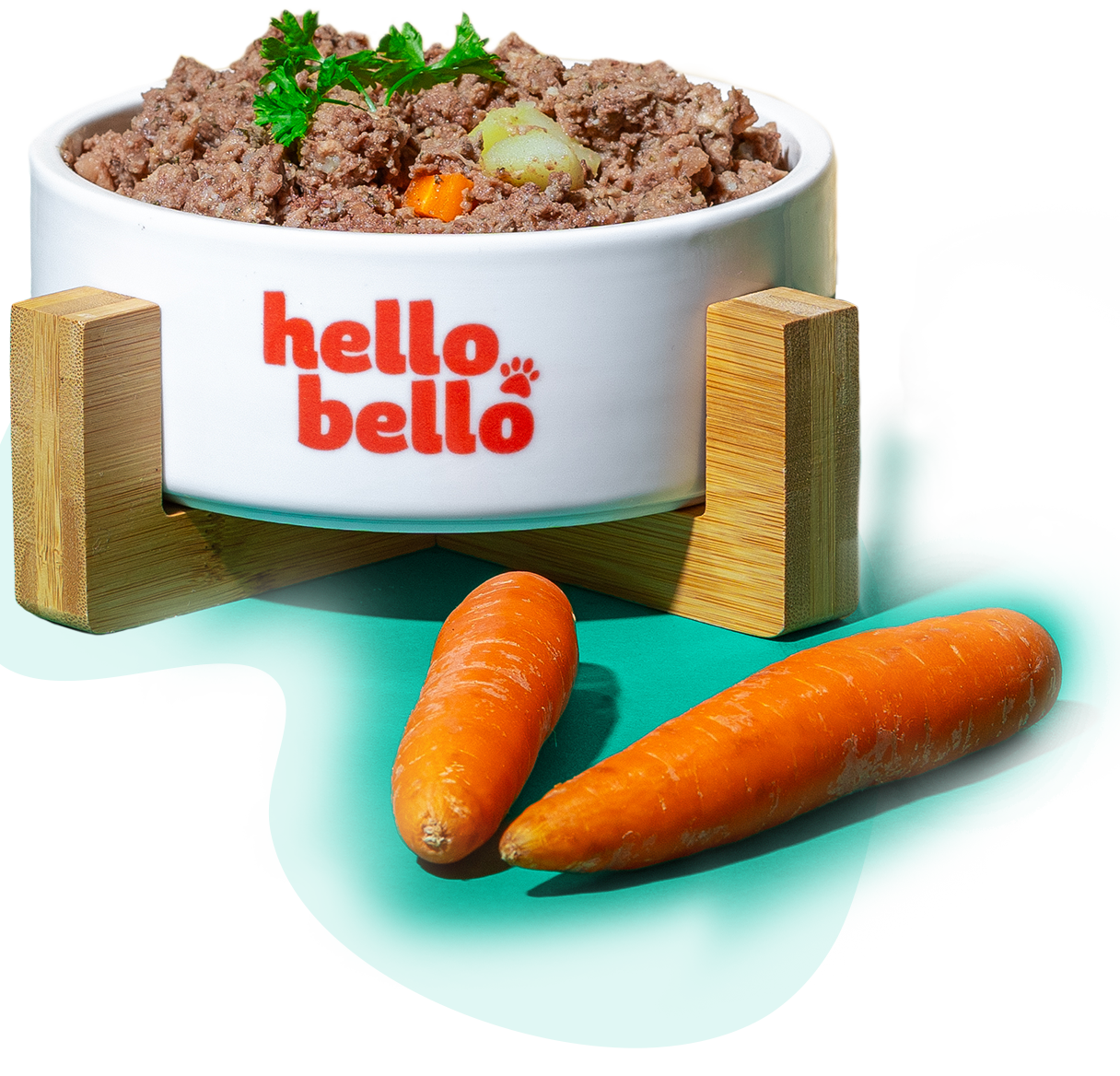


Ähnliche Artikel


