
You wake up in the morning and your dog has vomited yellow foam. Or you see white slime on the floor and immediately ask yourself: Is it still harmless or do I need to go to the vet right away?
Vomiting in dogs can quickly look dramatic. Especially when there is no food with it, but only yellow liquid, white foam, or thick slime. The good news: Occasional vomiting can occur in an otherwise fit dog. The more important news: Repeated vomiting, severe lethargy, pain, or blood in the vomit are clear warning signs.
In this guide, you will learn what yellow or white foam can mean, how to properly assess the situation, which immediate measures make sense, and when you should not wait.
Jump to section
Dog vomiting: What happens in the body?
Vomiting is an active defense mechanism. The body tries to expel stomach contents, irritating substances, or fluid from the upper digestive tract. Typical symptoms are nausea, drooling, smacking of the lips, gagging, and visible abdominal movements. This is exactly what distinguishes vomiting from regurgitation. In regurgitation, food or fluid comes back up more passively, often without prior gagging (Merck Veterinary Manual, n.d.; VCA Animal Hospitals, n.d.).
Foam usually occurs when there is little solid stomach content. Then stomach acid, mucus, air, and possibly bile mix together. This is why the vomit often looks yellow, white, clear, or slightly slimy.
Bello's fact:
Vomiting is not the same as gagging, coughing, or regurgitating. If your dog repeatedly "vomits foam" but at the same time coughs, has difficulty breathing, or brings up food immediately after eating without gagging, it should be checked by a veterinarian.
Yellow or white foam: the quick difference
Color alone does not replace a diagnosis. But it can help you better assess the situation.
What you see |
Common explanation |
Typical situation |
When to be careful? |
Yellow foam or yellow fluid |
Bile in the stomach, often on an empty stomach |
Early in the morning, at night, or after a long period without food |
If it occurs frequently, smells strong, your dog is lethargic, or shows other symptoms |
White foam or white slime |
Stomach acid, mucus, air, strong gagging |
After eating grass, nausea, irritation, stress, or coughing/gagging |
If your dog gags multiple times, has breathing problems, appears bloated, or foreign bodies are possible |
Brown, red, or "coffee-ground-like" |
Possible blood, digested blood, food remains, or other causes |
Not considered normal |
Get it checked by a veterinarian, especially in case of blood, pain, or lethargy |
Dog vomits yellow foam: What does that mean?
If your dog vomits yellow foam, bile is often involved. Bile is a digestive fluid that helps with the digestion of fat, among other things. It can look yellowish to greenish and appear foamy or slimy in vomit (University of Illinois College of Veterinary Medicine, 2025).
Yellow vomiting is particularly typical early in the morning or at night. Then the stomach has been empty for a long time, and bile can irritate the stomach. Some dogs react to this with nausea and vomit a small amount of yellow fluid. In veterinary medicine, recurring cases are considered for bilious vomiting syndrome, among other things. The important thing is: This diagnosis is not simply made based on color, but when other causes have been ruled out (University of Illinois College of Veterinary Medicine, 2025).
Good to know:
A dog that vomits yellow foam once in the morning and afterwards eats, drinks, and appears fit is not automatically an emergency. But if it happens regularly, becomes more frequent, or your dog is additionally lethargic, shows abdominal pain, or has no appetite, you should have it checked.

Dog vomits white foam: What does that mean?
White foam often occurs when the stomach is empty and stomach acid, mucus, and air mix together. It can also occur when your dog gags strongly, has eaten grass, or the stomach is irritated.
The exact situation is important: Did your dog eat grass before? Is it really gagging from the stomach or is it coughing more? If white foam occurs together with breathing problems, severe coughing, a bloated stomach, or restlessness, you should not wait. Then there may be more behind it than a sensitive stomach.

Warning signs: When vomiting is an emergency
There are situations in which vomiting is a warning sign. You should be especially attentive if your dog additionally appears apathetic, shows pain, or develops a fever. Diarrhea, heavy panting, shivering, or a bloated stomach are also indications that there may be more behind it.
Blood in the vomit – whether fresh red or dark like coffee grounds – is always a reason for immediate veterinary assessment.
Puppies, very small dogs, and seniors lose fluid more quickly. For them, even seemingly harmless vomiting can quickly become problematic, as the loss of fluid and electrolytes carries more weight.
In this case: Better to have it checked one more time than to wait too long.
Important!
White foam is not always "just stomach". If your dog gags, but nothing or hardly anything comes out, drools heavily, is restless, or has a bloated stomach, it can be an emergency. Please have it checked by a veterinarian immediately.
Common causes of foamy vomiting
Yellow or white foam can have many triggers. The most common are harmless to well manageable. Others need quick help.
Long period without food or empty stomach
Typical for yellow foam in the morning. Some dogs benefit from smaller, more regular meals or a small late meal. But this should be discussed with the veterinarian if vomiting recurs (University of Illinois College of Veterinary Medicine, 2025).
Change in food or unfamiliar food
Sudden food changes, very fatty snacks, table scraps, or garbage can irritate the stomach. Even normally good food can cause problems if the transition happens too quickly.
Grass, foreign bodies, or eating "something wrong"
Many dogs eat grass or pick up things on the go. Sometimes only slime or foam comes out. In case of suspicion of foreign bodies, poison, or severe pain, please do not wait.
Stress, excitement, or car rides
Stress can increase nausea. Some dogs react to travel, new situations, or a lot of excitement with smacking of the lips, drooling, and vomiting.
Gastrointestinal infection, parasites, or inflammation
If vomiting occurs together with diarrhea, fever, loss of appetite, or lethargy, an infection, a parasite problem, or inflammation may be behind it.
Pancreatitis, organ diseases, poisoning, or intestinal obstruction
More serious illnesses can also trigger vomiting. VCA lists pancreatitis, foreign bodies, liver or kidney diseases, and other systemic causes as possible triggers, among others (VCA Animal Hospitals, n.d.).
Bello's tip:
To support your dog's gastrointestinal health permanently and long-term, we recommend the HelloBello Gastrointestinal Drops. These contain probiotics and prebiotics, which promote natural intestinal regulation and at the same time strengthen the immune system
What you can do immediately if your dog vomits foam
These steps only apply if your dog vomits once, is an adult, otherwise appears fit, shows no severe pain, and there is no suspicion of poison, foreign bodies, or heatstroke.
- 1. Stay calm and observe: How often does your dog vomit? What color is it? Are there food remains, blood, grass, or foreign bodies?
- 2. Offer water, but do not let them drink large amounts at once. Water should generally remain available, because vomiting can lead to fluid loss (Merck Veterinary Manual, n.d.; VCA Animal Hospitals, n.d.).
- 3. Pause food briefly, if your dog is otherwise stable. Cornell calls a short food pause a possible measure in an isolated case, but water should not be withheld (Cornell University College of Veterinary Medicine, n.d.).
- 4. Then start with small, easily digestible portions. For example, with a bland diet recommended by the veterinarian or a very mild meal. Large portions can irritate the stomach again.
- 5. Note the time, frequency, and accompanying symptoms. A photo of the vomit can help at the veterinary practice without you having to transport it.
Bello's Tip:
If your dog tends to vomit yellow in the morning, smaller and more regular meals can help. If vomiting persists, please still have it checked to make sure it really is just an empty stomach.
What you should probably not do
- Do not give any medication from the home medicine cabinet. Even seemingly harmless remedies can be unsuitable or dangerous for dogs.
- Do not wait too long if your dog is lethargic, shows pain, vomits blood, or keeps retching.
- Do not "force-feed". If your dog is nauseous, food can further irritate the stomach.
- Do not let them drink huge amounts of water at once. Instead, offer small amounts and monitor.
- Do not assume that yellow foam is always harmless. Color helps with assessment, but does not replace a diagnosis.
When does your dog need to see the vet?
You should not wait it out with these warning signs. Repeated vomiting can lead to dehydration and electrolyte imbalances. Blood, pain, fever, weakness, or vomiting for more than 24 hours should be checked by a veterinarian (Cornell University College of Veterinary Medicine, n.d.; Merck Veterinary Manual, n.d.; VCA Animal Hospitals, n.d.).
Warning signs |
Why take it seriously? |
What to do? |
Vomiting multiple times or for more than 24 hours |
Fluid loss, electrolyte imbalance, possible underlying illness |
Have it checked by a veterinarian |
Blood, coffee-ground particles, or very dark vomit |
Indication of bleeding or severe irritation |
Contact the practice or emergency service immediately |
Lethargy, weakness, collapse, fever |
Signs that more than a mild stomach irritation may be behind it |
See a veterinarian promptly |
Abdominal pain, bloated belly, unsuccessful retching |
Possible emergency, e.g., foreign body, bloat, or other acute causes |
Contact the emergency service immediately |
Vomiting plus diarrhea, no drinking, or dry mucous membranes |
Risk of dehydration |
Have it checked by a veterinarian |
Puppy, senior, very small dog, or pre-existing condition |
Higher risk of rapid deterioration |
Have it checked early |
Suspected poisoning or foreign body |
Can quickly become life-threatening |
Contact the veterinarian or poison control/emergency service immediately |

Nutrition for a sensitive stomach: What can help?
If your dog vomits once, a different food won't automatically solve the problem. But if your dog repeatedly reacts sensitively, vomits yellow in the morning, licks frequently, eats grass, or has problems after food changes, it's worth taking a closer look at their feeding.
Most important are regular meals, a slow food transition, well-tolerated ingredients and a nutritionally complete recipe. The WSAVA nutritional guidelines emphasize that nutrition should always be assessed individually. This includes the dog, food, feeding management, and health status (Freeman et al., 2011). FEDIAF provides the reference values in Europe for complete and safe nutrient supply in complete foods (European Pet Food Industry Federation [FEDIAF], 2025).
Especially with sensitive dogs, it is therefore not only crucial what ends up in the bowl, but also how well it suits their age, weight, activity level, tolerance, and needs.
Bello's Tip:
If your dog repeatedly vomits or reacts sensitively over time, feeding should not only be "mild", but also complete and individually tailored. But a gastrointestinal problem should never replace a veterinary check.
HelloBello: gentle, individual, and perfectly tailored
HelloBello is no substitute for a veterinary examination if your dog is acutely ill. But if your dog generally reacts sensitively and you want to rely on clear, complete feeding in the long term, freshly cooked dog food can be a practical solution.
Our meals are gently cooked at 90 °C, delivered frozen, and individually tailored to your dog. Age, weight, activity level, and special needs are incorporated into the meal plan. This means you don't have to calculate, portion, or supplement yourself, but instead get a ready-made meal designed for complete nutrition.
This is especially practical for dog owners who want to give their dog high-quality, freshly cooked meals but don't want to cook or calculate nutrients themselves every day.

How you can prevent vomiting in everyday life
- Feed regularly and avoid very long gaps between meals if your dog tends to vomit yellow foam in the morning.
- Transition food slowly, ideally over several days.
- Avoid table scraps, very fatty snacks, and easy access to trash or compost.
- On walks, make sure your dog does not pick up foreign objects, poison baits, or spoiled items.
- For a sensitive stomach: small, well-tolerated portions are better than large meals.
- Watch for changes: Frequent licking, grass eating, morning vomiting, or loss of appetite are signs to take a closer look.
FAQ: Dog vomits yellow or white foam
Why does my dog vomit yellow foam in the morning?
It is often because the stomach has been empty for a long time and bile irritates the stomach lining. If it happens once and your dog is otherwise fit, you can monitor them. If it happens regularly, it should be checked by a veterinarian.
Is yellow foam in dogs always bile?
Very often yes, because bile looks yellowish to greenish. Nevertheless, color alone cannot make a diagnosis. What is important are the frequency, smell, amount, and the general condition of your dog.
What does white foam in dogs mean?
White foam is often caused by stomach acid, mucus, and air, especially when the stomach is empty or your dog is retching heavily. It can also occur with coughing, irritation, stress, or more serious causes.
When is vomiting in dogs an emergency?
You should have it checked immediately if there is vomiting with blood, severe retching without relief, a bloated belly, severe lethargy, fever, abdominal pain, collapse, or suspected poisoning or foreign body.
Should I give my dog food if they vomit foam?
If your dog vomits once and is otherwise fit, a short food break can be useful. Water should remain available. Afterwards, you can start with small, easily digestible portions. If in doubt, please ask a veterinarian.
Does a bland diet help with yellow or white foam?
A bland diet can help in the short term after mild vomiting once. But it is not a long-term solution and is not automatically nutritionally complete. If your dog vomits more often, the cause should be checked.
Can a food change help?
Sometimes yes, especially if long gaps between meals, poor tolerance, or very irregular feeding play a role. The transition should be slow and accompanied by a veterinarian if vomiting persists.
Can I give my dog medication for nausea?
Please not without consulting a veterinarian. Medications for nausea can be useful, but only if the cause, condition, and dosage are right.
Ready to give your dog a healthier and longer life?
Order well-tolerated dog food now and !
Order now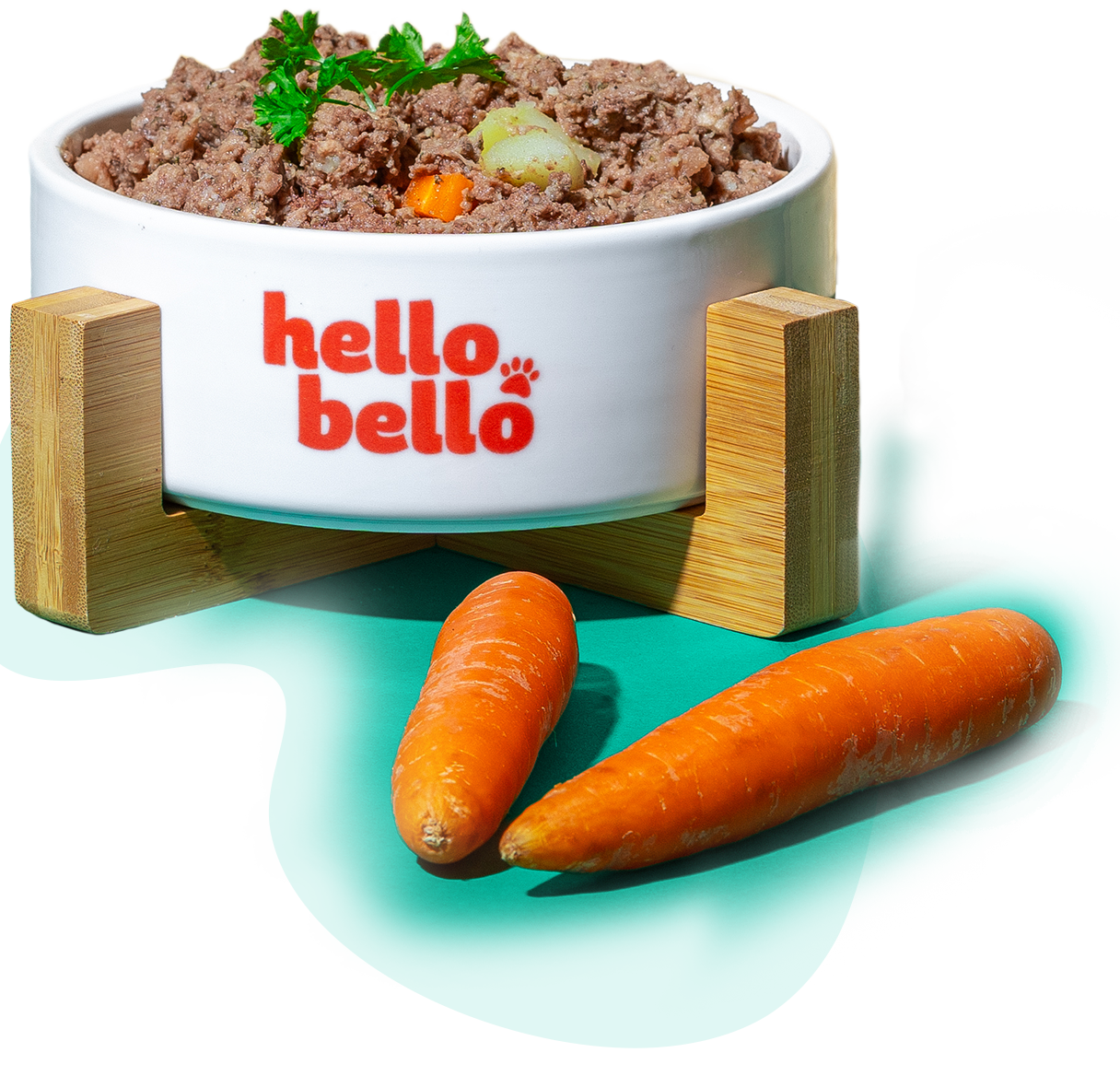
Conclusion: Observe, assess correctly, act in time
If your dog vomits yellow or white foam, it is not automatically an emergency. Yellow foam is often bile, while white foam is often caused by stomach acid, mucus, or retching. However, it is not just the color that matters, but the overall picture.
If your otherwise fit dog vomits once, you can often observe them first. Repeated vomiting, blood, lethargy, pain, fever, diarrhea, a bloated belly, or suspected poisoning and foreign bodies should be seen by a veterinarian.
For everyday life: Regular meals, a gradual change in food, and an individually suitable, nutritionally complete diet can help relieve the stomach in the long term. And if your dog reacts sensitively over time, it is worth choosing a food that not only looks good but is truly right for them.

Anita Lorber
Sources:
Cornell University College of Veterinary Medicine. (n.d.). Vomiting. Riney Canine Health Center. Retrieved June 17, 2026, from https://www.vet.cornell.edu/departments-centers-and-institutes/riney-canine-health-center/canine-health-topics/vomiting
European Pet Food Industry Federation. (2025). Nutritional guidelines for complete and complementary pet food for cats and dogs. FEDIAF. https://europeanpetfood.org/self-regulation/nutritional-guidelines/
Freeman, L., Becvarova, I., Cave, N., MacKay, C., Nguyen, P., Rama, B., Takashima, G., Tiffin, R., Tsjimoto, H., & van Beukelen, P. (2011). WSAVA nutritional assessment guidelines. Journal of Small Animal Practice, 52(7), 385-396. https://doi.org/10.1111/j.1748-5827.2011.01079.x
Merck Veterinary Manual. (n.d.). Vomiting in dogs. Retrieved June 17, 2026, from https://www.merckvetmanual.com/dog-owners/digestive-disorders-of-dogs/vomiting-in-dogs
University of Illinois College of Veterinary Medicine. (2025, December 1). Why is my pet vomiting? Here’s one option. https://vetmed.illinois.edu/pet-health-columns/bilious-vomiting-syndrome-pet/
VCA Animal Hospitals. (n.d.). Vomiting in dogs. Retrieved June 17, 2026, from https://vcahospitals.com/know-your-pet/vomiting-in-dogs
Ready to give your dog a healthier and longer life?
Order gluten-free dog food now and 30 % save!
Order now


Ähnliche Artikel


